
Demand Generation vs Lead Generation: Strategies for Local B2B Growth
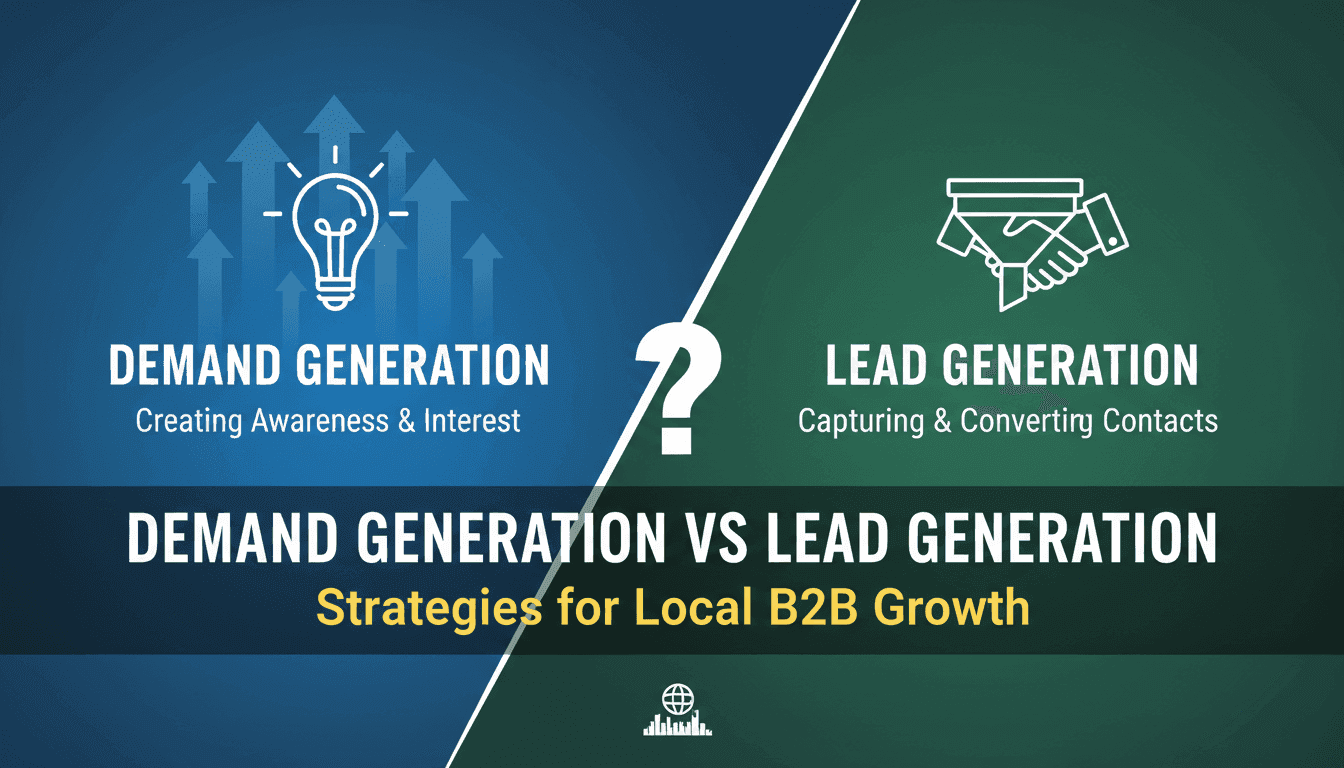
Table Of Contents
- Understanding the Fundamental Difference
- What Is Demand Generation?
- What Is Lead Generation?
- How Demand Generation and Lead Generation Work Together
- Demand Generation Strategies for Local B2B Companies
- Lead Generation Strategies for Local B2B Growth
- Leveraging AI for More Effective Lead Discovery
- Building Your Integrated Strategy
- Measuring Success: Key Metrics to Track
- Common Pitfalls to Avoid
If you're running a local B2B business, you've likely heard the terms "demand generation" and "lead generation" used interchangeably. While they're closely related, understanding the distinction between these two approaches can be the difference between sporadic sales and sustainable growth.
Many local business owners struggle with this confusion, investing time and resources into tactics that don't align with their actual business goals. Some focus exclusively on generating leads without building awareness, while others create demand but fail to capture the interest they've generated. Both scenarios leave money on the table.
This guide will clarify the difference between demand generation and lead generation, explain how they complement each other, and provide actionable strategies specifically designed for local B2B companies. You'll learn how to build awareness in your market, capture high-quality leads, and leverage modern AI-powered tools to streamline the entire process. Whether you're a marketing agency, professional services firm, or B2B service provider, these insights will help you create a comprehensive growth strategy that delivers measurable results.
Demand vs Lead Generation
Your Complete Strategy for Local B2B Growth
Understanding the Core Difference
How They Work Together
Build Awareness
Demand Generation
Capture Interest
Lead Generation
Close Sales
Revenue Growth
💡 Key Insight: Demand generation fills your sales funnel with interested prospects; lead generation moves them down the funnel by capturing contact information and qualifying interest.
5 Essential Strategies for Local B2B Success
Create Locally Relevant Content
Address local market conditions, regional challenges, and community-specific topics that resonate with your geographic audience.
Leverage AI-Powered Lead Discovery
Use real-time web scanning and intelligent matching to identify qualified prospects continuously, avoiding outdated lead lists.
Optimize Conversion Touchpoints
Create multiple, service-specific conversion opportunities rather than generic contact forms to match different visitor intents.
Build Strategic Community Partnerships
Collaborate with complementary service providers and participate in local business events to amplify your visibility.
Prioritize Lead Quality Over Quantity
Focus on leads that match your ideal customer profile with genuine interest and budget authority, not just high volumes.
Understanding the Fundamental Difference
The confusion between demand generation and lead generation stems from their interconnected nature, but the distinction is crucial for developing effective marketing strategies.
Demand generation is the comprehensive process of creating awareness and interest in your products or services. It's about making your target market aware that they have a problem and that your business offers a solution. Demand generation casts a wider net, focusing on education, brand building, and establishing your company as a trusted authority in your field.
Lead generation, by contrast, is the tactical process of capturing information from prospects who have already expressed interest in what you offer. It's about converting that awareness and interest into identifiable potential customers whose information you can use to nurture them toward a purchase decision.
Think of it this way: demand generation fills the top of your sales funnel with interested prospects, while lead generation moves those prospects down the funnel by capturing their contact information and qualifying their interest. You need both working in harmony to build a sustainable growth engine for your local B2B business.
What Is Demand Generation?
Demand generation encompasses all marketing activities designed to create awareness and generate interest in your business offerings. For local B2B companies, this means establishing your presence in your geographic market and demonstrating your expertise to potential customers before they're actively searching for your services.
The primary goals of demand generation include building brand recognition, educating your market about problems and solutions, creating trust and credibility, and ultimately generating interest that makes future lead generation efforts more effective. Unlike direct lead capture tactics, demand generation often doesn't require prospects to provide their contact information immediately.
Effective demand generation for local businesses might include publishing valuable content that addresses common industry challenges, hosting educational webinars or workshops in your community, participating in local business events and trade shows, maintaining an active presence on relevant social media platforms, and developing thought leadership through speaking engagements or contributed articles.
The beauty of demand generation is that it creates compounding returns over time. Each piece of content, each presentation, and each interaction builds your reputation and makes your subsequent marketing efforts more effective. When someone finally needs your services, your business is already top-of-mind because you've been consistently providing value.
What Is Lead Generation
Lead generation is the process of identifying and capturing contact information from prospects who have shown interest in your offerings. For local B2B businesses, this typically means converting anonymous website visitors, event attendees, or content consumers into identifiable contacts that your sales team can engage.
Unlike demand generation's broad awareness-building approach, lead generation is inherently conversion-focused. You're asking prospects to take a specific action that signals their interest and provides you with a way to continue the conversation. This might involve filling out a contact form, downloading a resource, requesting a consultation, or registering for an event.
The quality of your leads matters significantly more than quantity, especially for local B2B companies with limited sales resources. A hundred leads in your target market with genuine interest and budget authority are infinitely more valuable than a thousand generic contacts with no real purchasing intent.
Modern AI Local Business Discovery tools have transformed lead generation by addressing two critical challenges: outdated data and poor lead matching. Traditional lead databases quickly become obsolete as businesses close, relocate, or change their service offerings. Real-time discovery ensures you're always working with current information about active businesses in your market.
Equally important is intelligent matching. Not every business in your geographic area represents a good prospect for your services. Advanced AI algorithms can evaluate whether a lead truly fits your ideal customer profile based on multiple criteria, including industry, business size, online presence, and specific indicators that suggest they might need your services.
How Demand Generation and Lead Generation Work Together
The relationship between demand generation and lead generation isn't either/or; it's a continuous cycle that feeds your sales pipeline. Demand generation creates the awareness and interest that makes lead generation possible, while successful lead generation validates that your demand generation efforts are reaching the right audience.
Consider a local SEO Agency as an example. Their demand generation efforts might include publishing weekly blog posts about local search optimization, speaking at chamber of commerce events about digital marketing, and sharing case studies on LinkedIn showing how they've helped other local businesses increase visibility. These activities don't immediately capture leads, but they build awareness and establish expertise.
When a local business owner searching for "how to improve Google rankings" finds one of those blog posts, reads several articles, and then sees a case study from a company similar to theirs, they're primed for lead generation. A well-placed offer for a free SEO audit or website analysis converts that nurtured interest into an identifiable lead.
Without the demand generation foundation, the lead generation offer would fall flat because there's no trust or awareness. Without the lead generation mechanism, all that demand generation effort creates awareness but no way to capture it and move prospects through the sales process.
For local B2B businesses, this integrated approach is particularly powerful because your market is geographically concentrated. Once you build demand in your local market, that reputation spreads through referrals and community connections, making each subsequent lead generation effort more effective.
Demand Generation Strategies for Local B2B Companies
Local B2B businesses have unique advantages when it comes to demand generation. Your geographic focus allows you to become a recognized authority in your specific market rather than competing with national brands for attention. Here are proven strategies that work particularly well for local companies.
Content marketing with local relevance remains one of the most effective demand generation approaches. Rather than creating generic industry content, focus on topics that address local market conditions, regulatory environments, or regional business challenges. A local commercial insurance broker might publish content about state-specific coverage requirements or analyze risk factors particular to businesses in their region.
Community engagement and partnerships amplify your visibility far beyond what paid advertising can achieve. Sponsor local business events, participate in industry associations, and collaborate with complementary service providers. A Business AI consulting firm might partner with accounting firms and law practices to co-host educational sessions about digital transformation for local businesses.
Educational workshops and webinars position you as an expert while providing genuine value to your target market. The key is focusing on education rather than sales pitches. Teach local businesses something valuable, and they'll remember you when they need services in your area. Record these sessions and repurpose them as ongoing content assets.
Strategic Content Marketing that addresses the entire buyer journey creates multiple touchpoints with prospects. Develop content for awareness ("What is marketing automation?"), consideration ("How to choose a marketing automation platform"), and decision ("Implementing marketing automation for small teams") stages. Each piece builds awareness and moves prospects closer to becoming leads.
Local media and PR shouldn't be overlooked in the digital age. Local business publications, radio shows, and podcasts are always seeking expert commentary. These placements build credibility and reach decision-makers who may not encounter your digital content.
The consistent thread through all these strategies is value delivery without immediate expectation of return. You're building awareness and trust that creates a foundation for effective lead generation.
Lead Generation Strategies for Local B2B Growth
Once you've built demand and awareness in your market, strategic lead generation converts that interest into actionable sales opportunities. The most effective approaches for local B2B companies combine digital efficiency with personal touchpoints.
Conversion-optimized website experiences are non-negotiable in modern lead generation. Your website should clearly communicate what you do, who you serve, and why prospects should choose you. More importantly, it needs strategic conversion points throughout the user journey. This includes contact forms designed for specific services, downloadable resources that demonstrate expertise, consultation booking tools that eliminate friction, and chat functionality for immediate engagement.
Many B2B service providers make the mistake of having only a generic "Contact Us" form. Instead, create multiple conversion opportunities tailored to different visitor intents. Someone researching solutions needs different options than someone ready to request a proposal.
AI-powered lead discovery has revolutionized how local businesses identify and qualify prospects. Rather than purchasing static lists or manually researching potential clients, modern platforms transform your ideal customer criteria into targeted searches that identify active, relevant businesses in real-time.
AI Local Business Discovery platforms continuously scan for new businesses matching your specifications, evaluate their suitability based on multiple data points, and deliver updated leads monthly. This ensures you're always working with current information rather than outdated databases where half the contacts have changed or businesses have closed.
The intelligent matching component is particularly valuable for local B2B companies. The system scores each potential lead based on how well they match your ideal customer profile, allowing you to prioritize outreach to prospects most likely to convert. This dramatically improves conversion rates while reducing time wasted on poor-fit prospects.
Targeted local advertising amplifies your reach when done strategically. Rather than broad campaigns, use geographic and demographic targeting to reach decision-makers in your area. LinkedIn advertising works exceptionally well for B2B lead generation when you target by job title, company size, and location. Google search ads capturing high-intent keywords can connect you with prospects actively looking for solutions.
Referral programs and strategic partnerships leverage your existing relationships to generate warm leads. Local B2B communities are often tight-knit, and recommendations carry significant weight. Create formal referral programs that make it easy for satisfied clients to recommend you, and develop partnerships with complementary service providers who serve the same target market.
A Social Media Agency might partner with web design firms, PR companies, and branding consultants to cross-refer clients. These partnerships work because you're serving the same types of businesses without directly competing.
Event-based lead generation combines demand generation's awareness-building with direct lead capture. Host workshops, roundtables, or networking events that bring together your target prospects. Registration captures their information, attendance builds relationships, and follow-up converts interest into opportunities.
Leveraging AI for More Effective Lead Discovery
The traditional approach to lead generation for local businesses involved purchasing lists, manual research, or relying solely on inbound interest. Each method has significant limitations that modern AI-powered solutions address.
Purchased lists quickly become outdated, often containing businesses that have closed, relocated, or fundamentally changed their operations. You waste time and damage your reputation by reaching out to irrelevant contacts. Manual research is thorough but incredibly time-consuming, limiting the volume of leads you can identify and qualify.
AI-driven lead discovery platforms solve these challenges through several key capabilities. Real-time web scanning continuously identifies businesses matching your criteria as they appear online, launch new websites, or expand their services. You're discovering prospects at the optimal moment when they're actively building their presence.
Intelligent matching algorithms evaluate dozens of signals to determine whether a business represents a good fit for your services. This goes far beyond basic industry classification to consider factors like online presence maturity, service offerings, business model, and indicators of growth or need.
Automated enrichment supplements basic business information with contact details, social media presence, technology usage, and other data points that inform your outreach strategy. You're not just getting a business name and address; you're receiving a comprehensive profile that enables personalized engagement.
Continuous discovery means your pipeline is constantly refreshed with new opportunities. Rather than working through a static list that depletes over time, you receive regular updates of newly qualified leads matching your specifications. This creates predictable, sustainable pipeline growth.
For specialized agencies, the Leads Marketplace concept introduces an additional opportunity. Create and sell industry-specific lead campaigns that you've developed and validated. An agency specializing in serving dental practices could package their lead discovery criteria and sell it to non-competing agencies in other markets.
The efficiency gains are substantial. What might take days of manual research happens automatically and continuously. Your team focuses on high-value activities like relationship building and consultation rather than lead identification and data verification.
Building Your Integrated Strategy
The most successful local B2B companies don't choose between demand generation and lead generation; they integrate both into a cohesive growth strategy. Here's how to build an approach that leverages the strengths of each.
Start with clear ideal customer profiles. Document exactly who you serve best, including industry verticals, company size, geographic location, specific challenges you solve, and decision-maker characteristics. This clarity informs both your demand generation messaging and your lead generation targeting.
Map your buyer journey. Understand the typical path prospects take from first awareness to purchase decision. What questions do they ask at each stage? Where do they look for information? What triggers them to move from research to action? Your demand generation content addresses early-stage questions, while lead generation mechanisms appear at key decision points.
Create content that serves both purposes. The best content generates demand while also capturing leads. A comprehensive guide to selecting business insurance builds awareness of considerations buyers should evaluate (demand generation) while a downloadable checklist version captures contact information (lead generation). Think about how each content piece can serve multiple objectives.
Implement progressive engagement. Not every visitor is ready to become a lead on their first interaction. Create multiple engagement levels that allow prospects to consume value before committing their information. Someone might read several blog posts, then download a resource, then attend a webinar, and finally request a consultation. Each step builds trust while progressively qualifying their interest.
Align with sales processes. Your lead generation efforts should deliver prospects your sales team can effectively engage. Define what constitutes a qualified lead, establish service-level agreements for follow-up timing, and create feedback loops so marketing learns which lead sources convert best. Integration between AI Marketing Service tools and your CRM ensures nothing falls through the cracks.
Leverage marketing automation. Once you've captured a lead, automated nurturing keeps them engaged until they're ready for sales conversation. Triggered email sequences, personalized content recommendations, and behavior-based outreach maintain momentum without requiring constant manual effort.
Balance inbound and outbound. Inbound lead generation (prospects coming to you) is efficient but limited by your current visibility. Outbound approaches using AI-discovered leads expand your reach to qualified prospects who haven't found you yet. The combination creates more predictable pipeline growth.
Measuring Success: Key Metrics to Track
You can't optimize what you don't measure. Effective demand and lead generation strategies require tracking specific metrics that indicate health and identify improvement opportunities.
For demand generation, focus on awareness and engagement metrics. Website traffic from target markets shows whether you're reaching the right audience. Content engagement rates (time on page, pages per session, return visitors) indicate whether your material resonates. Social media reach and engagement in local business communities measures your visibility. Brand search volume growth suggests increasing awareness in your market.
These metrics won't directly correlate to immediate revenue, and that's okay. Demand generation is a longer-term investment that makes all subsequent marketing more effective. Track trends over quarters and years rather than expecting immediate conversion.
For lead generation, focus on conversion and quality metrics. Lead volume by source shows which channels deliver the most opportunities. Conversion rates at each funnel stage identify bottlenecks in your process. Lead quality scores (whether manually assigned by sales or automated through AI) indicate whether you're attracting the right prospects. Cost per lead helps optimize your budget allocation.
Most importantly, track lead-to-customer conversion rate and customer acquisition cost by source. Some channels might generate high volumes of low-quality leads, while others deliver fewer but better-qualified prospects. The goal isn't maximum leads; it's maximum customers at an acceptable acquisition cost.
Time-based metrics also matter for local businesses with longer sales cycles. Track time from first touch to qualified lead, and from qualified lead to customer. Understanding these timelines helps you forecast pipeline and identify where prospects are getting stuck.
For businesses using AI SEO Agents or other automation tools, monitor efficiency gains. Are you identifying more qualified leads in less time? Has your cost per acquisition decreased? Is your sales team spending more time on high-value activities versus administrative work?
Common Pitfalls to Avoid
Even with solid strategies, local B2B companies often stumble on predictable challenges. Awareness of these pitfalls helps you avoid them.
Focusing exclusively on lead volume is perhaps the most common mistake. It's tempting to celebrate a month with 500 new leads, but if only five are actually qualified prospects, you've created more work without meaningful results. Quality always trumps quantity, especially for businesses with limited sales resources.
Neglecting demand generation because it doesn't immediately produce leads creates a fragile pipeline. When you rely entirely on direct lead generation tactics, you're constantly starting from zero awareness with cold prospects. Building demand creates a foundation that makes lead generation progressively easier and more effective.
Ignoring data quality undermines even the best strategies. Outdated contact information, incorrect industry classifications, or duplicated records waste time and frustrate your team. Invest in tools and processes that maintain clean, current data. AI-powered discovery platforms solve this by providing real-time information rather than static databases.
Failing to align sales and marketing creates gaps where leads fall through. Marketing might consider a prospect qualified based on their engagement, while sales views them as too early-stage. Define qualification criteria together, establish clear handoff processes, and create feedback loops so both teams continuously improve.
Expecting immediate results leads to abandoning strategies before they can prove effective. Demand generation in particular requires patience. You're building awareness and trust that compounds over time. Give initiatives at least 6-12 months before evaluating their full impact.
Spreading resources too thin across too many channels prevents you from executing any of them well. Especially for smaller local businesses, it's better to excel at two or three approaches than to dabble ineffectively in ten. Choose channels where your target audience is actually present and where you can sustain consistent effort.
Neglecting the local advantage means competing on the same terms as national providers. Your geographic concentration is an asset. Emphasize local expertise, community connections, and the ability to meet face-to-face. These advantages matter significantly in B2B relationships.
By avoiding these common mistakes and implementing the integrated strategies outlined in this guide, you'll build a sustainable growth engine that consistently fills your pipeline with qualified local prospects.
The distinction between demand generation and lead generation isn't just academic; it directly impacts how you allocate resources and measure success. Understanding that you need both, how they work together, and how modern AI tools can enhance both processes positions your local B2B business for efficient, scalable growth.
Demand generation and lead generation aren't competing strategies; they're complementary components of a complete B2B growth system. Demand generation builds the awareness and trust that makes lead generation possible, while lead generation converts that interest into actionable sales opportunities.
For local B2B businesses, the combination is particularly powerful. Your geographic concentration allows you to become a recognized authority in your market through consistent demand generation efforts. When prospects in your area need services you provide, your business is already top-of-mind. Strategic lead generation then captures that awareness and moves prospects through your sales process.
Modern AI-powered tools have transformed what's possible for local businesses, particularly in lead generation. Real-time discovery, intelligent matching, and continuous pipeline updates solve the fundamental challenges of outdated data and poor lead quality that have plagued traditional approaches. You can now identify and engage qualified local prospects with an efficiency that was previously available only to enterprise companies with massive research teams.
The key is integration. Build demand through valuable content, community engagement, and thought leadership. Capture leads through optimized conversion points, AI-powered discovery, and strategic outreach. Measure both awareness metrics and conversion metrics to understand what's working. Most importantly, maintain consistency over time, as both demand and lead generation create compounding returns.
Your local market represents a concentrated opportunity. The businesses that will buy from you are within a defined geography, often connected through community networks and industry associations. Systematic demand generation makes you known throughout that market. Strategic lead generation converts that awareness into relationships and revenue. Together, they create sustainable growth for your B2B business.
Ready to Transform Your Local Lead Generation?
Stop wasting time on outdated lead lists and poor-fit prospects. LocalLead.ai uses advanced AI algorithms to discover, match, and score local businesses that perfectly fit your ideal customer profile. Get real-time leads with continuous monthly updates, ensuring your pipeline is always fresh and your team is always focused on the highest-quality opportunities.