
Geo-Targeting Strategies: Reach Local Audiences with Precision Ad Campaigns
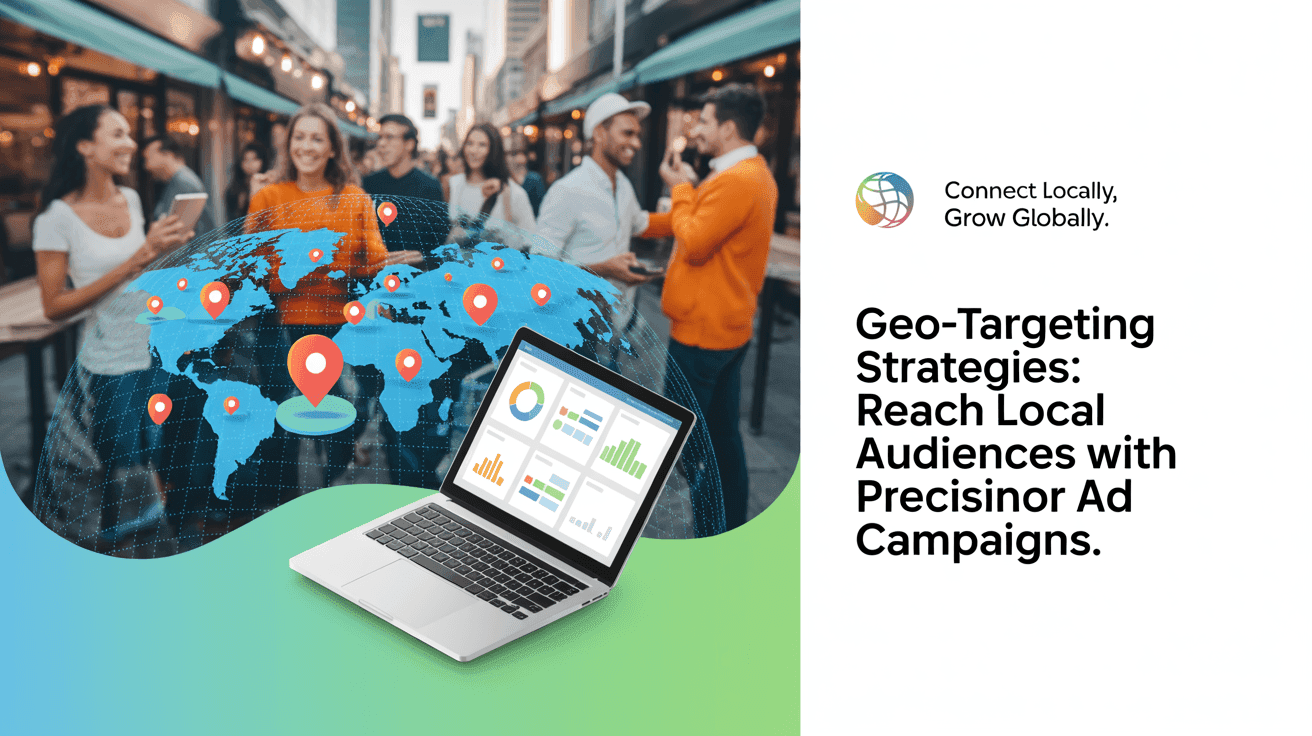
Table Of Contents
- What Is Geo-Targeting and Why It Matters for Local Businesses
- The Foundation: Understanding Different Types of Location Targeting
- Platform-Specific Geo-Targeting Capabilities
- Advanced Geo-Targeting Strategies That Drive Results
- Leveraging AI for Smarter Location-Based Campaigns
- Common Geo-Targeting Mistakes and How to Avoid Them
- Measuring Success: Key Metrics for Geo-Targeted Campaigns
- The Future of Geo-Targeting in Local Marketing
When a potential customer searches for "coffee shop near me" or "emergency plumber," they're not looking for options across the country—they need immediate, local solutions. This is where geo-targeting transforms advertising from a broad spray-and-pray approach into a precision instrument that connects businesses with customers at the exact moment and location where conversion is most likely. For local businesses competing in increasingly crowded digital spaces, mastering geo-targeting strategies isn't just an advantage—it's essential for survival.
Geo-targeting allows advertisers to deliver customized messages to audiences based on their physical location, creating relevance that generic campaigns simply cannot match. Whether you're a restaurant chain looking to drive foot traffic during lunch hours, a retail store promoting a location-specific sale, or a service provider targeting neighborhoods within your coverage area, location-based advertising offers unprecedented control over who sees your message and when. The challenge lies not in whether to use geo-targeting, but in implementing it with the strategic precision that separates market leaders from those left behind.
This comprehensive guide explores the geo-targeting strategies that drive measurable results for local businesses. You'll discover how different targeting methods work across major advertising platforms, learn advanced tactics that maximize return on ad spend, and understand how AI-powered tools are revolutionizing the way businesses identify and reach local audiences. By the end, you'll have a actionable framework for building geo-targeted campaigns that connect with local customers more effectively than ever before.
What Is Geo-Targeting and Why It Matters for Local Businesses
Geo-targeting is the practice of delivering advertising content to users based on their geographic location, determined through IP addresses, GPS data, Wi-Fi connections, or cellular network information. Unlike traditional advertising that broadcasts the same message to everyone regardless of location, geo-targeting ensures your ads reach only those people who can realistically become customers based on where they are or where they regularly spend time. This specificity transforms advertising efficiency by eliminating wasted impressions on audiences outside your service area while increasing relevance for those within it.
For local businesses, the impact of geo-targeting extends far beyond simple cost savings. When a home services company targets homeowners within a 15-mile radius rather than an entire metropolitan area, every dollar spent reaches someone they can actually serve. Similarly, when a retail store promotes an in-store event only to people within driving distance, the conversion rate naturally increases because the audience has realistic access to what's being offered. This alignment between advertising reach and business capability creates campaigns that perform better across every metric—higher click-through rates, better conversion rates, and improved return on investment.
The strategic advantage becomes even more pronounced when you consider consumer behavior patterns. Studies consistently show that local searches have exceptionally high commercial intent, with users actively looking to make purchases or visit locations soon after searching. By combining this high-intent behavior with precise geographic targeting, businesses position themselves in front of ready-to-buy customers at the exact moment when location makes action possible. This convergence of intent, relevance, and opportunity is what makes geo-targeting indispensable for any business with a physical presence or defined service area.
The Foundation: Understanding Different Types of Location Targeting
Successful geo-targeting begins with understanding the distinct targeting methods available and when each approach delivers the best results. Radius targeting allows advertisers to draw a circle around a specific point—typically a business location—and reach everyone within that defined distance. This method works exceptionally well for businesses with clear service areas like restaurants, retail stores, or service providers who operate within predictable geographic boundaries. The key is selecting the appropriate radius based on realistic customer travel patterns rather than arbitrary distances that waste budget on unlikely prospects.
Zip code and postal code targeting offers a different kind of precision, aligning campaigns with community boundaries that often correlate with demographic and psychographic characteristics. This approach proves particularly valuable when certain neighborhoods or districts represent your ideal customer profile more strongly than others. For instance, a luxury home improvement company might target specific zip codes known for higher property values and homeownership rates, ensuring their premium services reach audiences most likely to afford and appreciate them. The administrative nature of these boundaries also simplifies reporting and performance analysis across different market segments.
City and metro area targeting provides broader reach while maintaining geographic relevance, making it suitable for businesses with multiple locations or those offering services across larger regions. However, this approach requires careful consideration of whether your business can truly serve the entire area effectively. A common mistake is targeting an entire city when your actual capacity or competitive advantage exists only in certain districts. More advanced options include DMA (Designated Market Area) targeting, which follows television market boundaries, and political boundary targeting that focuses on states, counties, or congressional districts—each serving specific campaign objectives.
Beyond these standard methods, location extension targeting leverages specific place categories like airports, shopping centers, or business districts to reach customers in contextually relevant moments. Someone searching near an airport might be traveling and looking for convenient services, while someone in a shopping district is already in a buying mindset. Similarly, polygon targeting allows advertisers to draw custom shapes around irregular areas that don't fit circular or administrative boundaries, providing ultimate flexibility for businesses with unique service territories. Understanding these distinctions enables marketers to layer multiple targeting types for campaigns that balance reach with precision.
Platform-Specific Geo-Targeting Capabilities
Google Ads delivers some of the most sophisticated geo-targeting options available, allowing advertisers to target or exclude locations at various granularities from countries down to specific radius measurements. The platform's location targeting options include targeting people physically in your targeted location, people regularly in that location, or people who have shown interest in that location—each serving different strategic purposes. For truly local businesses, focusing on people physically present or regularly present eliminates wasted spend on users merely searching about an area with no intention of visiting. Google's integration with search intent data also enables advertisers to capture high-value moments when users explicitly search for location-specific solutions.
The platform's bid adjustments for locations add another layer of control, allowing advertisers to increase or decrease bids based on geographic performance. If certain neighborhoods consistently deliver higher conversion rates, increasing bids for those areas ensures your ads appear more prominently where they matter most. Google's location reporting provides granular insights into where clicks and conversions originate, enabling continuous optimization based on actual performance data rather than assumptions. This feedback loop between targeting, bidding, and performance analysis creates campaigns that improve over time as you identify and prioritize your most valuable geographic segments.
Facebook and Instagram offer location targeting with unique advantages stemming from their rich user profile data and behavior tracking. Beyond basic geographic targeting, these platforms enable advertisers to reach people who live in a location, people recently in a location, people traveling to a location, or people who were recently in a location. This temporal dimension opens creative opportunities—a hotel could target people who recently visited their city to encourage return trips, while a restaurant could focus on residents rather than tourists. The platforms' detailed demographic and interest data also allows combining location with psychographic targeting, creating highly specific audience segments like "women aged 25-45 living in downtown Chicago interested in yoga and wellness."
LinkedIn's geo-targeting serves B2B marketers with location options combined with professional attributes, enabling campaigns that reach decision-makers in specific industries within defined geographic areas. A commercial real estate firm could target CFOs and operations managers at companies with 100+ employees in specific metropolitan areas, creating relevance through both location and professional context. Meanwhile, platforms like Snapchat and TikTok offer location targeting particularly effective for younger demographics, with capabilities including proximity targeting for retail locations and event-based targeting for businesses capitalizing on concerts, sporting events, or festivals. Each platform's unique user base and behavior patterns require tailored approaches that align targeting capabilities with where your audience actually spends time.
Advanced Geo-Targeting Strategies That Drive Results
One of the most powerful yet underutilized geo-targeting strategies is dayparting combined with location targeting to reach customers during high-intent windows. A breakfast restaurant might intensify ad delivery to nearby office workers between 6:30 and 9:00 AM on weekdays, while a happy hour promotion could target the same geographic area between 4:00 and 6:00 PM. This temporal-geographic intersection ensures advertising budgets concentrate on moments when conversion probability peaks, rather than maintaining constant presence regardless of relevance. For businesses with predictable traffic patterns—retailers during shopping hours, service providers during business hours, entertainment venues before weekend evenings—this strategy multiplies campaign efficiency dramatically.
Competitor location targeting represents another advanced tactic where businesses advertise specifically to customers near competitor locations. When someone searches for services while physically near a competitor's business, appearing in those search results with a compelling differentiator can intercept customers before they commit. This approach requires careful messaging that highlights specific advantages rather than generic claims, giving prospects a compelling reason to choose you despite being closer to an alternative. However, this strategy works best when you can genuinely serve that location effectively—attracting customers you cannot satisfy creates negative experiences that damage long-term reputation.
Weather-triggered geo-targeting demonstrates how combining location with environmental conditions creates hyper-relevant campaigns. A roofing company might increase ad spend in zip codes experiencing severe weather, while an indoor entertainment venue could target areas during rainy weekends when outdoor activities become less appealing. Similarly, event-based targeting focuses advertising around concerts, conferences, sporting events, or festivals where large audiences gather with specific mindsets and needs. A rideshare service intensifying ads near a stadium after game completion or a restaurant targeting convention attendees during lunch hours exemplifies this approach. These strategies require real-time responsiveness and often benefit from automation tools that adjust targeting based on triggering conditions.
For businesses with multiple locations, location-specific creative customization elevates campaign performance by ensuring each audience sees messaging tailored to their specific area. Rather than generic ads mentioning multiple cities, dynamic creative shows each user their nearest location with accurate directions and local phone numbers. Some advanced implementations include mentioning neighborhood-specific landmarks, referencing local events or conditions, or highlighting location-specific inventory and offerings. This localization creates personal relevance that generic messaging cannot match, increasing both engagement and conversion rates. The investment in creating location-specific variations pays dividends through improved performance metrics across the customer journey.
Leveraging AI for Smarter Location-Based Campaigns
Artificial intelligence is fundamentally transforming how businesses identify and reach local audiences, moving beyond manual targeting toward predictive, adaptive systems that optimize in real-time. AI-driven lead discovery platforms like LocalLead.ai analyze vast datasets to identify active, relevant prospects within specific geographic areas, eliminating the outdated data and poor matching that plague traditional approaches. By transforming business requirements into targeted keywords and conducting real-time web searches, these systems discover opportunities as they emerge rather than relying on static lists that decay the moment they're compiled. For businesses seeking local customers, this continuous discovery ensures campaigns always reach the freshest, most relevant audiences.
The intelligent matching and scoring capabilities of AI systems evaluate each potential lead's suitability based on multiple factors beyond simple location. While a business might be physically within your service area, AI analysis can determine whether they exhibit characteristics associated with your best customers—business size, industry type, growth indicators, online presence, and engagement patterns. This multi-dimensional assessment creates prioritized prospect lists where geographic relevance combines with business fit, ensuring sales and marketing efforts focus on opportunities with the highest probability of conversion. The result is geo-targeted campaigns that reach not just local audiences, but the right local audiences.
Predictive analytics enhance geo-targeting by identifying geographic patterns invisible to human analysis. Machine learning algorithms process historical conversion data to reveal which neighborhoods, proximity to competitors, or demographic combinations predict customer lifetime value most accurately. Armed with these insights, businesses can weight their targeting and bidding strategies toward areas with the highest expected return, rather than treating all locations within their service area equally. This data-driven precision transforms geo-targeting from a broad location filter into a sophisticated revenue optimization tool that continuously improves as more performance data accumulates.
For agencies and marketing professionals managing multiple clients or campaigns, AI-powered platforms streamline the entire process through automation and scalability. Solutions like AI Marketing Service and AI SEO Managed Service integrate geo-targeting optimization with broader marketing strategies, ensuring location-based campaigns align with content marketing, social media, and overall brand positioning. The monthly updates of tailored leads provided by advanced AI systems mean campaigns stay fresh without constant manual research, freeing marketers to focus on creative strategy and client relationships rather than data management. This combination of precision, automation, and continuous optimization represents the evolution of geo-targeting from a tactical setting to a strategic advantage.
Common Geo-Targeting Mistakes and How to Avoid Them
One of the most prevalent geo-targeting mistakes is casting too wide a geographic net in an attempt to maximize reach, ultimately diluting campaign effectiveness. Many businesses default to targeting their entire city or metropolitan area when their realistic service capability or competitive advantage exists only in specific neighborhoods. This overly broad approach wastes budget on audiences unlikely to convert due to distance, inconvenience, or competition from closer alternatives. The solution requires honest assessment of where your best customers actually originate and willingness to exclude areas that generate clicks but not conversions. Start with tighter targeting based on proven customer locations, then gradually expand only into areas demonstrating comparable performance.
Conversely, some advertisers fall into the trap of setting radius targets too narrowly, missing qualified prospects just outside arbitrary boundaries. A business might set a 5-mile radius when customer analysis reveals significant numbers traveling 7-8 miles for their services. This artificial limitation stems from assumptions rather than data, potentially excluding valuable market segments. The remedy involves analyzing actual customer locations—using CRM data, delivery addresses, or store visit information—to identify realistic travel patterns before setting geographic parameters. Your targeting should reflect customer behavior, not convenient round numbers or unexamined assumptions about how far people will travel.
Ignoring location bid adjustments represents another missed opportunity, treating all geographic areas equally despite clear performance differences. Within any service area, certain locations consistently outperform others in conversion rate, customer lifetime value, or competitive intensity. Without bid adjustments reflecting these realities, advertising budgets distribute evenly rather than concentrating on highest-value opportunities. Implementing location-based bid modifiers based on performance data ensures premium positions in valuable markets while maintaining presence elsewhere at appropriate cost levels. This requires regular analysis of geographic performance reports and willingness to make meaningful adjustments—increasing bids 30-50% for top performers while decreasing 20-30% for underperformers creates significant impact.
A frequently overlooked mistake involves failing to exclude irrelevant locations within broader geographic targets. When targeting a city or metro area, advertisers often neglect to exclude specific neighborhoods, zip codes, or towns that consistently generate unqualified traffic. Perhaps certain areas fall outside realistic service zones, contain customer types misaligned with your offering, or simply never convert despite generating clicks. Actively excluding these locations prevents wasted spend while allowing broader targeting elsewhere. Similarly, businesses should exclude their own office locations where employees and their devices might trigger ads, along with competitor locations unless intentionally pursuing conquest strategies. These negative location targets refine campaigns with minimal effort for measurable efficiency gains.
Measuring Success: Key Metrics for Geo-Targeted Campaigns
Measuring geo-targeted campaign performance requires tracking both standard digital metrics and location-specific indicators that reveal geographic effectiveness. Conversion rate by location serves as the fundamental metric, showing which geographic areas transform ad spend into actual business results. This analysis should extend beyond simple location reporting to examine conversion rates at multiple geographic granularities—by city, neighborhood, zip code, or custom radius zones. Identifying significant variance in conversion rates across locations signals either opportunity for optimization through increased investment in high-performers or need for creative/landing page adjustments in underperforming areas.
Cost per acquisition (CPA) by geography reveals the true efficiency of location targeting, exposing whether certain areas require disproportionate spend to generate results. Two neighborhoods might deliver equal conversion volumes, but if one requires twice the spend to achieve those results, the economics differ dramatically. This metric guides budget allocation decisions and bid adjustment strategies, ensuring resources concentrate where acquisition costs align with customer lifetime value. For businesses with location-specific profit margins—perhaps due to delivery costs or competitive intensity—CPA analysis should incorporate these variables rather than treating all conversions equally.
For businesses with physical locations, store visit tracking through Google Ads and other platforms provides invaluable insights into how online advertising drives offline behavior. This metric connects digital campaigns to actual foot traffic, revealing whether geo-targeted ads successfully motivate people to visit locations. Visit rate by geographic distance shows how travel requirements affect conversion likelihood, informing optimal radius settings. Advanced implementations track not just visits but in-store conversions and purchase values, creating complete attribution from ad exposure through final transaction. This closed-loop measurement transforms geo-targeting from an isolated tactic into an integrated component of location-based marketing strategy.
Share of voice by location helps businesses understand competitive position within specific geographic markets. Are you appearing prominently in your highest-value neighborhoods, or do competitors dominate those crucial areas? Auction insights and impression share metrics reveal where increased budgets or bids might capture additional market presence versus where you already achieve saturation. Geographic share of voice analysis also identifies expansion opportunities—adjacent markets where minimal competition suggests untapped potential. Combined with performance metrics, these competitive indicators guide strategic decisions about where to defend existing position, where to attack competitor strongholds, and where to pioneer new markets with favorable dynamics.
The Future of Geo-Targeting in Local Marketing
The evolution of geo-targeting technology continues accelerating, with emerging capabilities promising even greater precision and relevance. Hyperlocal targeting at the building or venue level is becoming increasingly accessible, allowing advertisers to reach customers in specific shopping centers, office buildings, or even competitor parking lots. As location data accuracy improves and privacy frameworks mature, these ultra-precise targeting capabilities will enable moment-based marketing that responds to exactly where customers are and what they're likely doing in those locations. A coffee shop could target office building lobbies during morning commute windows, while a lunch restaurant focuses on the same locations approaching midday.
Integration of offline and online behavior data will create richer customer profiles that combine geographic patterns with purchase history, website behavior, and app usage. Businesses will target not just people in a location, but people in a location who have demonstrated specific interests or behaviors predictive of conversion. This convergence of location intelligence with behavioral data eliminates the traditional separation between online and offline marketing, creating unified strategies that follow customers across all touchpoints. The businesses that master this integration will achieve personalization levels that make generic location targeting seem primitive by comparison.
Artificial intelligence will continue expanding its role through autonomous optimization systems that adjust targeting, bidding, and creative elements in real-time based on performance patterns and predictive models. Rather than marketers manually analyzing reports and making periodic adjustments, AI systems will continuously test variations, identify opportunities, and implement optimizations at speeds impossible for human management. Platforms like AI SEO Agents and AI Chat Agents demonstrate how AI capabilities are extending across marketing functions, with geo-targeting benefiting from these same advances. The marketer's role will shift from tactical execution toward strategic direction—defining objectives, providing creative concepts, and ensuring alignment with broader business goals while AI handles optimization mechanics.
The growing sophistication of voice search and augmented reality will create new geo-targeting opportunities as these technologies become primary interfaces for local discovery. When customers ask voice assistants for nearby services or point their phones at streets to see information overlaid on physical locations, businesses with optimized geo-targeted presence will capture these interactions. Preparing for this future requires building comprehensive local presence across platforms, maintaining accurate location data, and creating content optimized for these emerging interfaces. The businesses investing in these capabilities now position themselves to dominate local markets as consumer behavior continues evolving toward these technologies, while those maintaining only traditional approaches will struggle to remain visible.
Geo-targeting has evolved from a basic location filter into a sophisticated strategic capability that separates market leaders from followers in local business competition. The combination of precise targeting options, platform-specific capabilities, advanced strategies, and AI-powered optimization creates unprecedented opportunities to reach local audiences with relevant messages at optimal moments. Success requires moving beyond surface-level implementation toward strategic deployment based on customer data, performance analysis, and continuous refinement. Businesses that master these geo-targeting strategies don't just advertise more efficiently—they build sustainable competitive advantages in their local markets through superior customer acquisition and relationships built on relevance and timing.
The precision and efficiency of geo-targeting make it indispensable for any business seeking to dominate local markets in an increasingly digital world. As you've seen throughout this guide, success extends far beyond simply selecting a radius or city—it requires understanding the nuances of different targeting methods, leveraging platform-specific capabilities, implementing advanced strategies that combine location with timing and context, and measuring results with geographic granularity that reveals true performance.
The businesses achieving exceptional results with geo-targeted campaigns share common characteristics: they ground targeting decisions in customer data rather than assumptions, they continuously optimize based on location-specific performance metrics, and they increasingly leverage AI-powered tools to identify opportunities and automate optimization at scales impossible through manual management. The gap between these sophisticated approaches and basic location targeting continues widening, creating competitive moats that become increasingly difficult for late adopters to cross.
As geo-targeting technology evolves toward hyperlocal precision, behavioral integration, and autonomous optimization, the strategic advantages available to early adopters will only grow. The question facing local businesses isn't whether to implement geo-targeting, but whether to pursue it with the strategic sophistication that delivers sustainable competitive advantage. Those who commit to mastering these capabilities position themselves to capture disproportionate market share as location-based marketing becomes increasingly central to customer acquisition across every industry.
Ready to Transform Your Local Lead Generation?
Discover how AI-powered precision can revolutionize your approach to finding and reaching local customers. LocalLead.ai combines advanced geo-targeting capabilities with intelligent lead discovery to ensure you're not just reaching local audiences, but reaching the right local audiences with continuous updates and superior matching.
Stop wasting budget on outdated data and poor targeting. Start leveraging AI to identify active, relevant local leads with the precision your business deserves. Explore LocalLead.ai today and see how intelligent local discovery transforms your customer acquisition results.