
Localized Promotions: How to Run Region-Specific Offers for Multi-Location Businesses
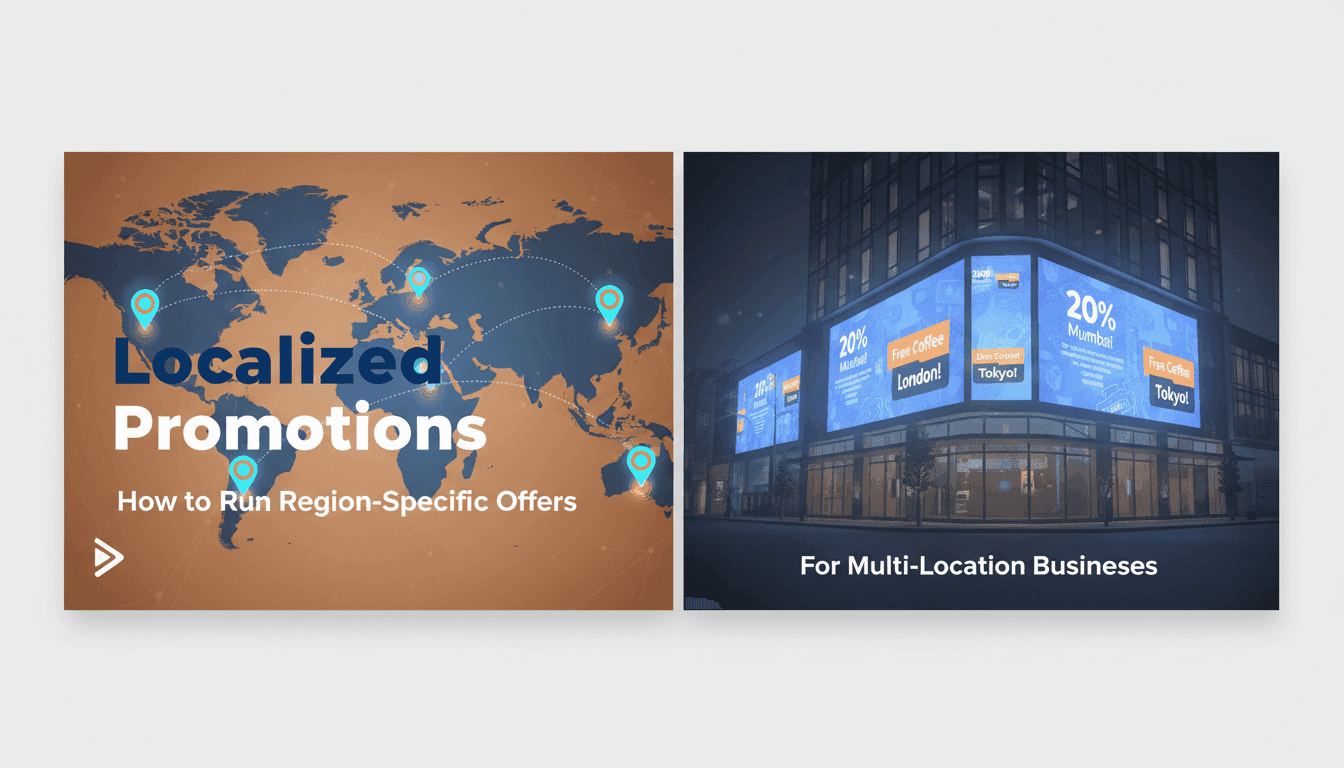
Table Of Contents
- Understanding the Power of Localized Promotions
- Building Your Regional Market Intelligence
- Creating Region-Specific Promotion Strategies
- Technology Infrastructure for Multi-Location Campaigns
- Segmentation Strategies That Drive Results
- Timing and Seasonality Considerations
- Measuring Performance Across Locations
- Scaling Localized Promotions Without Losing Quality
- Common Pitfalls and How to Avoid Them
Managing promotions for a single location is challenging enough. When you're operating multiple locations across different regions, the complexity multiplies exponentially. Each market has its own demographics, purchasing behaviors, competitive landscape, and cultural nuances that demand tailored approaches.
Yet many multi-location businesses fall into the trap of running blanket promotions across all their locations—missing opportunities to maximize engagement and revenue in each unique market. A promotion that resonates in urban Seattle might fall flat in suburban Phoenix. What works during winter in Minneapolis could be irrelevant in year-round sunny San Diego.
Localized promotions solve this problem by allowing you to customize your offers, messaging, and timing to match the specific characteristics of each region where you operate. This strategic approach can increase promotion redemption rates by 40-60% compared to one-size-fits-all campaigns, while building stronger connections with local communities.
In this comprehensive guide, you'll discover how to develop, implement, and scale region-specific promotions that drive measurable results across all your locations. Whether you're managing five locations or five hundred, these strategies will help you maximize the impact of every promotional dollar you spend.
Understanding the Power of Localized Promotions
Localized promotions represent a fundamental shift from broadcast marketing to precision targeting. Instead of treating all your locations as interchangeable units, you recognize that each operates within a distinct microeconomy with unique characteristics.
Regional purchasing power varies dramatically across markets. A discount that seems modest in San Francisco might be considered generous in Tulsa. Understanding these economic differences allows you to calibrate your promotional depth appropriately—maximizing perceived value without unnecessarily eroding margins.
Cultural and demographic factors shape how people respond to different promotion types. College towns respond enthusiastically to student discounts and late-night offers. Retirement communities might prefer early-bird specials and senior discounts. Urban professionals value convenience-focused promotions like mobile ordering discounts, while suburban families respond to bulk purchase deals.
The competitive landscape also varies significantly by region. Your location in a market with minimal competition can afford different promotional strategies than one fighting for share in a saturated market. Localized promotions let you respond to these competitive realities with precision.
Perhaps most importantly, localized promotions demonstrate that you understand and value each community you serve. When a business acknowledges local events, supports community causes, or creates offers that reflect regional preferences, it builds authentic connections that transcend transactional relationships.
Building Your Regional Market Intelligence
Effective localized promotions start with deep knowledge of each market where you operate. This intelligence-gathering process should be systematic and ongoing, not a one-time exercise.
Begin by analyzing your existing customer data at the location level. Look beyond basic demographics to understand purchasing patterns, average transaction values, visit frequency, and preferred shopping times. This historical data reveals what's working in each market and where opportunities exist.
Local economic indicators provide crucial context for promotion planning. Research median household income, employment trends, and economic growth patterns in each market. Areas experiencing economic growth might respond better to premium product promotions, while markets facing headwinds might need value-focused offers.
Competitive intelligence is equally important. Identify your main competitors in each region and monitor their promotional activities. What types of offers are they running? How frequently do they promote? What seems to be generating customer response? Tools like AI Local Business Discovery can help you systematically track competitor activity and identify market opportunities across all your locations.
Don't overlook qualitative insights from your frontline teams. Store managers, sales associates, and local marketing staff interact with customers daily and understand regional nuances that data alone might miss. Establish regular feedback channels to capture these insights and incorporate them into your promotion planning.
Local events and seasonal patterns should also inform your strategy. School calendars, sports seasons, weather patterns, and community events create promotional opportunities that vary by region. A promotion tied to a local festival or sports championship can generate significantly more engagement than a generic national campaign.
Creating Region-Specific Promotion Strategies
With market intelligence in hand, you can develop promotional strategies tailored to each region's unique characteristics. This doesn't mean creating completely different campaigns for every location—that would be operationally unsustainable. Instead, develop a flexible framework that allows for regional customization within consistent brand guidelines.
Start by identifying your promotion objectives for each market. Are you trying to drive trial in a new location? Increase visit frequency in a mature market? Combat competitive pressure in a challenging region? Clear objectives guide your promotion design and help you measure success accurately.
Tiered promotional approaches work well for multi-location businesses. Develop several promotion templates—perhaps value-focused, premium, and trial-driving options—then deploy the most appropriate version in each market based on local conditions. This provides customization while maintaining operational efficiency.
Consider these region-specific promotion types:
Geographic radius offers: Target customers within specific distances of each location with location-aware mobile promotions. A coffee chain might offer a free pastry to anyone within two miles of a location during their morning commute.
Local partnership promotions: Collaborate with complementary businesses in each market. A gym might partner with local health food stores, sports equipment retailers, or wellness practitioners for cross-promotional campaigns that feel authentically local.
Community-focused campaigns: Tie promotions to local causes, events, or interests. A restaurant chain could create signature items named after local landmarks or donate a portion of promotion proceeds to community organizations.
Weather-responsive offers: Automatically trigger promotions based on local weather conditions. Ice cream shops promote during heat waves, while coffee chains push hot beverage deals when temperatures drop.
Competitive response promotions: Deploy targeted offers in markets where competitors are particularly aggressive, without unnecessarily discounting in markets where you maintain strong positioning.
The key is ensuring every promotion feels relevant to the local audience rather than a generic corporate campaign parachuted into their market.
Technology Infrastructure for Multi-Location Campaigns
Scaling localized promotions across numerous locations requires robust technology infrastructure. Manual management quickly becomes overwhelming and error-prone as you add locations and increase promotional frequency.
Your promotion management system should enable centralized creation and control with decentralized execution. Marketing teams at headquarters design promotional frameworks and set guard rails, while local teams or automated systems customize and deploy campaigns appropriate for their markets.
Essential technology capabilities include:
A centralized promotion database where all offers are created, approved, and tracked. This prevents conflicting promotions and ensures brand consistency while allowing regional variation.
Location-based targeting tools that deliver the right offers to the right audiences. Modern marketing platforms can trigger promotions based on geographic location, visit history, and customer preferences.
Integrated point-of-sale systems that recognize and apply location-specific promotions automatically. Seamless redemption is crucial—nothing frustrates customers more than promotions that don't work at checkout.
Real-time reporting dashboards that show promotional performance across all locations. You need immediate visibility into what's working and what's not so you can make rapid adjustments.
The AI Marketing Service approach leverages machine learning to optimize promotion timing, targeting, and offer structure based on performance data across locations. These systems can identify patterns that humans might miss and automatically adjust campaigns for maximum effectiveness.
Customer data platforms that unify customer information across locations and channels. Understanding customer behavior holistically—including cross-location visits and online engagement—enables more sophisticated promotional targeting.
Workflow management tools that route promotion approvals efficiently. Multi-location businesses need governance to maintain brand standards, but cumbersome approval processes slow execution and reduce agility.
Segmentation Strategies That Drive Results
Effective localized promotions combine geographic segmentation with other customer attributes to create highly targeted campaigns. Location is just one dimension—layering additional segmentation dramatically improves results.
Customer lifecycle stage is a powerful segmentation variable. New customers in each market need different promotions than loyal regulars. A welcome offer for first-time visitors might include a discount plus an introduction to your loyalty program, while retention promotions for at-risk customers might offer bonus rewards for returning.
Purchase history and preferences within each location reveal opportunities for personalized promotions. If a customer regularly purchases certain products at your downtown location, promote complementary items or seasonal variations. Someone who exclusively visits for lunch might respond to a dinner trial offer.
Demographic and psychographic segmentation adds another layer of precision. Within each geographic market, you can create distinct promotion tracks for different customer segments—value seekers, convenience-focused buyers, quality-conscious consumers, or eco-minded shoppers.
Consider this segmentation framework for a multi-location retail chain:
1. Urban Downtown Locations – Young Professionals Promotions: Lunchtime express deals, mobile order discounts, subscription services, exclusive evening shopping events
2. Suburban Locations – Families Promotions: Family bundle deals, kids-eat-free nights, bulk purchase discounts, seasonal family events
3. College Town Locations – Students Promotions: Student ID discounts, late-night specials, group purchase deals, textbook buyback tie-ins
4. Retirement Community Locations – Seniors Promotions: Early-bird specials, senior discount days, extended service times, health-focused product promotions
This segmented approach ensures you're speaking directly to the needs and preferences of each audience rather than hoping a generic message resonates with everyone.
Leveraging AI Local Business Discovery technology helps identify the specific customer segments present in each market, allowing you to match your segmentation strategy to actual market composition rather than assumptions.
Timing and Seasonality Considerations
When you run promotions matters as much as what you promote. Multi-location businesses must navigate complex timing considerations that vary significantly by region.
Seasonal patterns differ dramatically across geographic markets. Back-to-school season starts in early August in some regions and late September in others. Winter holiday shopping begins at different times depending on local culture and weather patterns. Spring cleaning season varies by climate zone.
Create seasonal promotion calendars for each region that align with actual local patterns rather than forcing a national calendar on all locations. Your Phoenix locations might run spring promotions in February, while Minneapolis locations wait until April.
Day-of-week and time-of-day patterns also vary by location and customer segment. Urban lunch spots see Tuesday-Thursday peaks, while suburban family restaurants do heavy weekend business. Analyze traffic patterns for each location and time promotions to either drive business during slow periods or maximize revenue during peak times.
Local event calendars create promotional opportunities unique to each market. Major sporting events, festivals, concerts, and community gatherings drive foot traffic and create natural promotion hooks. A location near a college campus should promote around home football games, while a downtown location might tie promotions to summer concert series.
Weather represents both challenge and opportunity for promotion timing. Unseasonably warm winter days in northern markets create opportunities for cold beverage promotions. Rainy weekends might trigger indoor entertainment or delivery promotions. Sophisticated multi-location marketers use weather data to automatically trigger appropriate offers in each market.
Competitive promotional calendars influence your timing decisions. If competitors consistently promote heavily during certain periods, you need strategies for those windows—either matching their activity or intentionally promoting during quieter periods when your message breaks through more clearly.
Test different promotional frequencies in different markets to find the optimal rhythm. Some markets respond well to constant promotional activity, while others become desensitized to frequent offers. Your goal is maximizing promotional impact without training customers to wait for discounts or devaluing your brand.
Measuring Performance Across Locations
Robust measurement is essential for optimizing localized promotions. You need visibility into performance at multiple levels—individual promotion, location, market, region, and company-wide—to understand what's working and make data-driven decisions.
Establish clear key performance indicators for each promotion before launch. Common metrics include:
Redemption rate: What percentage of customers exposed to the promotion actually used it? This measures promotional appeal and reach effectiveness.
Incremental sales lift: How much additional revenue did the promotion generate compared to baseline? This distinguishes between promotions that drive new business versus those that simply discount sales that would have happened anyway.
Customer acquisition cost: For trial-focused promotions, what did you spend to acquire each new customer? Compare this to customer lifetime value to ensure sustainable economics.
Profit impact: Beyond revenue, what was the net profit effect after accounting for discounts, promotional costs, and operational expenses? Some high-volume promotions might actually reduce profitability.
Long-term behavior change: Did the promotion influence future purchasing patterns, visit frequency, or average transaction values? The best promotions create lasting relationships, not just one-time transactions.
Create performance dashboards that allow you to compare results across locations and identify outliers. When a promotion performs exceptionally well or poorly in specific markets, investigate the underlying factors. These insights guide future promotion design and deployment.
Standardized reporting frameworks ensure you're making valid comparisons across markets. A 20% redemption rate might be excellent in one context and disappointing in another. Benchmark against location-specific norms and objectives rather than applying universal standards.
Implement regular performance reviews with location managers and regional teams to discuss results and gather qualitative insights. The numbers tell you what happened; conversations with local teams help you understand why.
Use cohort analysis to understand how customers acquired through different promotions behave over time. This reveals which promotional strategies attract valuable long-term customers versus one-time bargain hunters.
The most sophisticated multi-location marketers create feedback loops where performance data automatically informs future promotion decisions. Machine learning systems can identify the characteristics of successful promotions and suggest optimizations for upcoming campaigns.
Scaling Localized Promotions Without Losing Quality
As your business grows from dozens to hundreds of locations, maintaining promotional effectiveness while managing operational complexity becomes increasingly challenging. Success requires smart scaling strategies.
Promotion playbooks provide structure while allowing flexibility. Develop comprehensive guides for each promotion type that include objectives, target audiences, recommended timing, creative templates, measurement frameworks, and success criteria. Local teams can execute these proven playbooks while adapting details to their specific markets.
Create tiered approval processes based on promotion scope and risk. Small-scale local promotions might require only location manager approval, while major market-wide campaigns need regional or corporate sign-off. This accelerates execution for routine promotions while maintaining governance for high-impact initiatives.
Template-based creative systems allow rapid customization without requiring design resources for every variation. Develop flexible creative templates where local teams can swap images, adjust copy, and modify offers while maintaining brand consistency. Modern marketing platforms support this approach with dynamic content capabilities.
Invest in training programs that build promotional capabilities at all organizational levels. Location managers should understand promotion strategy, not just execution. This distributed expertise allows faster, smarter decisions without constant corporate involvement.
Establish communities of practice where marketing teams across locations share insights, successful tactics, and lessons learned. A promotion innovation in one market might be applicable elsewhere. These knowledge-sharing forums multiply the impact of local experimentation.
Consider market clusters where groups of similar locations share promotional strategies. You might have an "urban dense" cluster, a "suburban family" cluster, and a "college town" cluster, each with tailored promotion approaches. This provides customization without requiring unique strategies for every single location.
Leverage technology to automate routine aspects of promotion management—performance reporting, creative production, redemption tracking, and results analysis. This frees your team to focus on strategy and creative development rather than administrative tasks.
Partner with specialized agencies or platforms that understand multi-location marketing. Solutions like AI SEO Agents can help optimize local landing pages and promotional content at scale, while Content Marketing services can produce location-specific promotional assets efficiently.
Common Pitfalls and How to Avoid Them
Even experienced marketers encounter challenges when implementing localized promotions. Understanding common pitfalls helps you avoid costly mistakes.
Over-localization is possible. Creating completely unique promotions for every location becomes operationally unsustainable and dilutes brand consistency. Find the right balance between customization and efficiency by identifying which elements need localization (messaging, timing, offer depth) and which can remain standardized (brand positioning, creative style, core value proposition).
Inadequate market research leads to promotions that miss the mark. Making assumptions about market preferences without validation often produces disappointing results. Invest in understanding each market before deploying significant promotional resources. Small-scale tests can validate assumptions before full rollout.
Technology limitations frequently constrain localized promotion efforts. Many businesses discover too late that their marketing technology stack can't support the geographic targeting, performance tracking, or creative customization they need. Audit your technology capabilities before committing to sophisticated localization strategies and address gaps proactively.
Inconsistent execution across locations undermines promotional effectiveness. When some locations execute promotions enthusiastically while others ignore or poorly implement them, you get unreliable results and frustrated customers. Strong communication, clear expectations, and accountability mechanisms ensure consistent execution.
Failing to account for cannibalization between nearby locations can distort results. A promotion that drives customers from one of your locations to another isn't generating incremental business—it's just shifting sales. Design promotions and measure results at appropriate geographic levels to understand true incremental impact.
Promotion fatigue happens when you train customers to expect constant discounts. If you're always promoting, customers learn to wait for deals rather than paying full price. Establish clear promotional calendars with strategic quiet periods to maintain pricing integrity.
Neglecting profitability in favor of volume metrics is a dangerous trap. Promotions that drive impressive traffic or transaction counts but destroy margins aren't sustainable. Always evaluate promotional performance on profit contribution, not just top-line metrics.
Poor customer data management prevents sophisticated targeting and personalization. If you can't connect customer behavior across visits and channels, you can't deliver relevant personalized promotions. Invest in customer data infrastructure before attempting advanced localization strategies.
By anticipating these challenges and building strategies to address them, you set your localized promotion program up for long-term success rather than short-term gains followed by operational chaos.
Localized promotions represent a powerful competitive advantage for multi-location businesses willing to invest in understanding and serving each market's unique characteristics. By moving beyond one-size-fits-all campaigns to region-specific strategies, you can dramatically improve promotional performance while building stronger connections with local communities.
The key is approaching localization strategically rather than randomly. Start with deep market intelligence, develop flexible promotional frameworks, leverage technology to scale effectively, and continuously measure and optimize based on results. This disciplined approach allows you to balance the benefits of customization with the operational realities of managing promotions across numerous locations.
Remember that localized promotions are not just about varying discount depths or timing—they're about demonstrating genuine understanding of and commitment to each community you serve. When customers see that you recognize local preferences, support community causes, and create offers relevant to their specific needs, you build loyalty that transcends price competition.
Start small if you're new to localized promotions. Test different approaches in a few representative markets, learn what works, then expand gradually. As you build capabilities, processes, and technology infrastructure, you can increase sophistication and scale without losing effectiveness.
The businesses that master localized promotions create sustainable competitive advantages that are difficult for competitors to replicate. They operate with the efficiency of large organizations while delivering the relevance and personal touch of local businesses—truly the best of both worlds.
Ready to Supercharge Your Multi-Location Marketing?
Effective localized promotions start with understanding your local markets and identifying the right opportunities in each region. LocalLead.ai helps multi-location businesses discover and connect with relevant local audiences through AI-driven lead generation and market intelligence.
Our platform continuously discovers active, qualified leads in each of your markets, giving you the insights you need to create promotions that resonate locally. Whether you're managing five locations or five hundred, LocalLead.ai provides the market intelligence foundation for successful region-specific campaigns.
Discover how LocalLead.ai can transform your local marketing strategy →