
Marketing Orchestration: How to Coordinate Multi-Channel Local Campaigns with AI
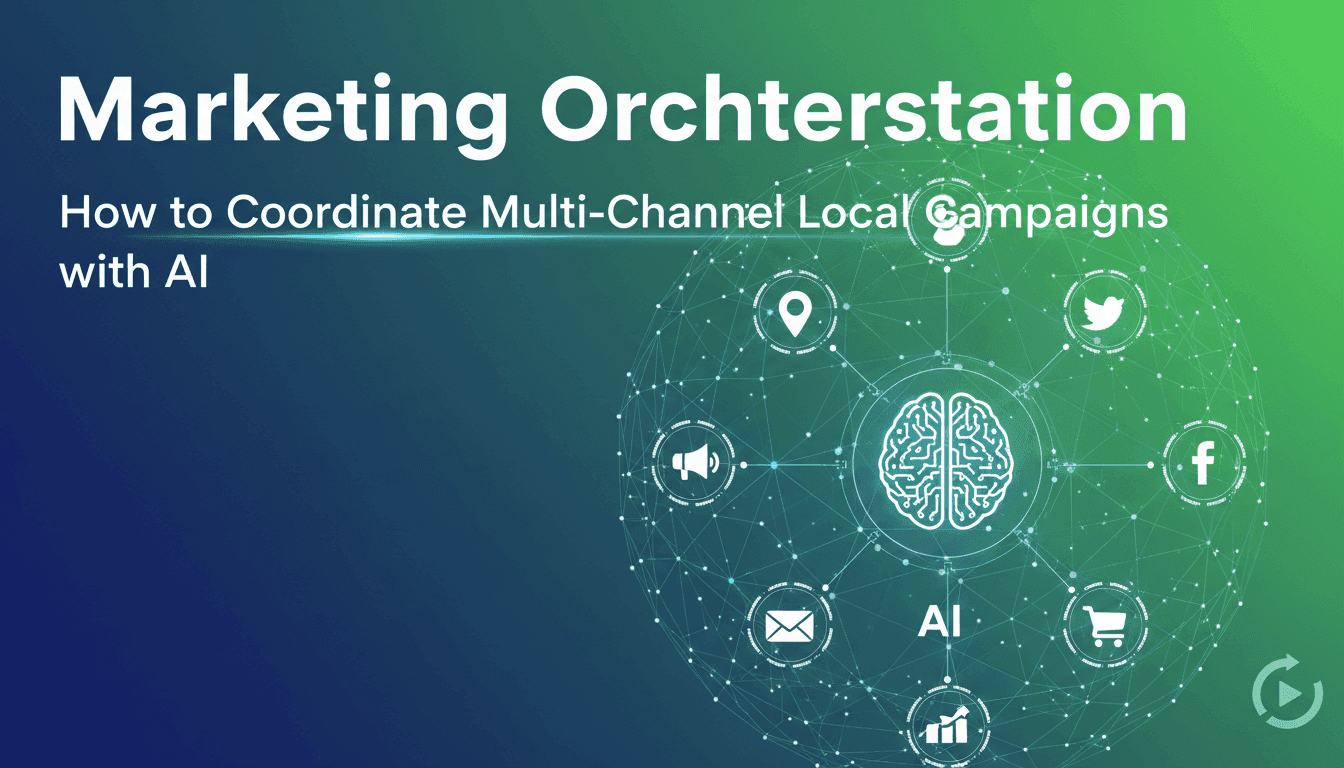
Table Of Contents
- What Is Marketing Orchestration?
- The Challenge of Multi-Channel Local Marketing
- How AI Transforms Marketing Orchestration
- Key Components of AI-Driven Marketing Orchestration
- Building Your Multi-Channel Orchestration Strategy
- AI Tools and Technologies for Marketing Orchestration
- Measuring Success in Orchestrated Campaigns
- Common Pitfalls and How to Avoid Them
Running a local marketing campaign across multiple channels used to mean juggling spreadsheets, switching between platforms, and hoping your message stayed consistent. One team would launch a Facebook campaign while another pushed email promotions, often without knowing what the other was doing. The result? Disconnected customer experiences, wasted budget, and missed opportunities.
Marketing orchestration changes this paradigm entirely. By coordinating every touchpoint across channels through intelligent automation and AI-driven insights, businesses can deliver seamless, personalized experiences that guide customers from awareness to conversion. For local businesses competing in saturated markets, this coordination isn't just convenient—it's essential for survival.
This comprehensive guide explores how AI-powered marketing orchestration enables local businesses to synchronize their multi-channel campaigns, optimize resource allocation in real-time, and create customer journeys that actually convert. Whether you're managing campaigns for a single location or multiple franchises, you'll discover practical strategies to transform fragmented marketing efforts into a unified, data-driven growth engine.
Marketing Orchestration at a Glance
How AI Coordinates Multi-Channel Local Campaigns for Maximum Impact
1The Challenge
Customer info scattered across platforms creates blind spots
Disconnected touchpoints miss critical conversion moments
Manual coordination overwhelms small marketing teams
2The AI Solution
Predictive Intelligence
Forecast behaviors, optimize ROI, and anticipate market trends
Real-Time Automation
Dynamic decisions in milliseconds across all channels
Hyper-Personalization
Unique journeys for each prospect based on behavior
3Core Components
Unified Customer Data Platform
Consolidates all touchpoints into single customer profiles
Cross-Channel Journey Mapping
Identifies conversion paths and eliminates friction points
Real-Time Decision Engine
Triggers next-best actions across channels in microseconds
Performance Attribution Analytics
Multi-touch models reveal true value of each interaction
4Implementation Roadmap
Audit Current Ecosystem
Document channels, tools, and identify integration gaps
Define Clear Objectives
Set measurable goals for traffic, lifetime value, and CAC
Prioritize Channel Integration
Start with high-impact channels like search, email, and social
Enable Continuous Learning
Schedule regular reviews and strategic adjustments
✓The Bottom Line
Marketing orchestration isn't just convenient—it's essential for local business survival in saturated markets.
Key Insight: AI transforms disconnected campaigns into seamless customer journeys that guide prospects from awareness to conversion through intelligent coordination across every touchpoint.
What Is Marketing Orchestration?
Marketing orchestration is the strategic coordination of marketing activities across multiple channels, touchpoints, and customer interactions to create cohesive, personalized customer journeys. Unlike traditional campaign management where each channel operates independently, orchestration ensures that every marketing element works in harmony toward common business objectives.
Think of it as conducting a symphony. Each instrument (email, social media, search ads, content marketing) plays its part at precisely the right moment, creating a unified experience rather than competing noise. The conductor—in this case, AI-powered orchestration platforms—ensures perfect timing, appropriate messaging, and seamless transitions between channels based on customer behavior and preferences.
For local businesses, marketing orchestration means your Google Ads campaigns inform your social media targeting, your email sequences respond to in-store visits, and your content strategy adapts to real-time search trends in your service area. This level of coordination was once only accessible to enterprise brands with massive marketing teams, but AI has democratized these capabilities.
The fundamental difference between basic marketing automation and true orchestration lies in intelligence and adaptability. Automation executes predefined sequences, while orchestration continuously analyzes performance data, customer signals, and market conditions to adjust strategies dynamically. This distinction becomes critical when managing local campaigns where customer behaviors, competitive landscapes, and seasonal trends shift rapidly.
The Challenge of Multi-Channel Local Marketing
Local businesses face unique obstacles when coordinating multi-channel campaigns. Geographic targeting requirements, location-specific inventory constraints, and community-based reputation management add complexity layers that national brands don't encounter. A promotion that works perfectly in one neighborhood might fall flat three miles away due to demographic differences, local events, or competitive dynamics.
Data fragmentation represents perhaps the most significant challenge. Customer information sits scattered across point-of-sale systems, social media platforms, email service providers, and analytics tools. Without a unified view, marketers can't understand which touchpoints drive conversions or how customers move between online and offline channels. This blind spot leads to budget waste, as teams continue investing in underperforming channels while neglecting high-potential opportunities.
Timing coordination adds another layer of complexity. A customer might see your Facebook ad during their morning commute, search for your business at lunch, receive an email in the afternoon, and visit your location after work. Without orchestration, these touchpoints operate independently, potentially delivering conflicting messages or missing critical moments when the customer is ready to convert.
Resource constraints exacerbate these challenges for local businesses. Unlike enterprise marketing teams with specialists for each channel, local marketers often wear multiple hats, managing social media, email, paid advertising, and content creation simultaneously. The cognitive load of optimizing each channel individually while maintaining strategic coherence becomes overwhelming, leading to reactive rather than strategic marketing.
How AI Transforms Marketing Orchestration
Artificial intelligence eliminates the manual complexity of multi-channel coordination by processing vast data streams, identifying patterns invisible to human analysts, and executing optimization decisions in milliseconds. This transformation occurs across three fundamental dimensions: intelligence, automation, and personalization at scale.
Predictive Intelligence enables AI systems to forecast customer behaviors, campaign performance, and market trends with remarkable accuracy. By analyzing historical data, seasonal patterns, and real-time signals, AI predicts which customers are most likely to convert, which channels will deliver optimal ROI for specific objectives, and when to intensify or pause campaign elements. For local businesses, this means understanding not just what happened last quarter, but what will likely happen next week, allowing proactive rather than reactive strategy adjustments.
Platforms like LocalLead.ai demonstrate this predictive power by transforming business requirements into targeted keywords, conducting real-time searches to identify active leads, and employing intelligent matching algorithms to score lead quality. This same AI capability extends to campaign orchestration, where systems predict which message variations, send times, and channel combinations will resonate with specific customer segments.
Intelligent Automation goes beyond simple if-then rules to dynamic decision-making based on complex variables. AI orchestration platforms continuously monitor campaign performance across channels, automatically reallocating budget toward high-performing tactics, adjusting bid strategies based on conversion probability, and triggering personalized customer journeys based on behavioral signals. This automation doesn't just save time—it makes optimization decisions faster and more accurately than humanly possible.
Consider a local restaurant running campaigns across Google Ads, Facebook, Instagram, and email. Traditional management requires manually checking each platform, comparing metrics, and adjusting budgets weekly or monthly. AI orchestration monitors performance every hour, shifts budget from underperforming Facebook ads to high-converting Google search campaigns, and adjusts targeting parameters based on real-time conversion data. The result is continuous optimization that responds to market dynamics as they unfold.
Hyper-Personalization represents AI's most powerful contribution to marketing orchestration. By analyzing individual customer behaviors, preferences, and interaction histories across all touchpoints, AI creates unique journeys for each prospect. Two customers in the same zip code might receive entirely different message sequences, offers, and channel experiences based on their specific behaviors and predicted needs.
This personalization extends to timing optimization as well. AI learns when individual customers are most likely to engage with emails, respond to ads, or visit locations, then coordinates message delivery across channels to match these patterns. For local businesses competing against larger brands, this level of personalization creates competitive advantages by delivering relevance that mass marketing cannot match.
Key Components of AI-Driven Marketing Orchestration
Successful marketing orchestration requires several integrated components working in concert. Understanding these elements helps businesses evaluate platforms and build effective strategies.
Unified Customer Data Platform
The foundation of effective orchestration is consolidated customer data. A Customer Data Platform (CDP) aggregates information from all touchpoints—website visits, social media interactions, email engagement, purchase history, and offline behaviors—into unified customer profiles. AI enhances these profiles by inferring attributes, predicting behaviors, and identifying segment patterns that inform targeting and personalization strategies.
For local businesses, CDP integration means connecting point-of-sale systems, appointment booking platforms, customer service records, and digital marketing tools. This integration reveals insights like which marketing channels drive in-store visits, how online engagement correlates with purchase value, and which customer segments show the highest lifetime value.
Cross-Channel Journey Mapping
AI-powered orchestration platforms map customer journeys across channels, identifying common paths to conversion and friction points that cause drop-off. These maps reveal how customers actually interact with your brand versus how you assume they do, highlighting opportunities to optimize touchpoint sequences and eliminate redundant or conflicting messages.
Advanced platforms use machine learning to continuously refine these journey maps, adapting to seasonal changes, competitive actions, and evolving customer preferences. This dynamic mapping ensures orchestration strategies remain relevant as market conditions shift.
Real-Time Decision Engine
The orchestration decision engine determines which messages to send, through which channels, at what times, to which customers. AI processes incoming signals—email opens, ad clicks, website visits, social media engagement—and triggers appropriate next actions based on campaign objectives and customer journey stage.
These engines operate on microsecond timescales, making decisions as customers interact with your brand. When a prospect clicks an ad, the engine might immediately suppress competing ads, trigger a personalized email sequence, and adjust website content based on predicted interests. This real-time responsiveness creates seamless experiences that guide customers toward conversion.
Multi-Channel Execution Infrastructure
Orchestration platforms must connect with execution channels—email service providers, advertising platforms, social media management tools, and content management systems. APIs and integrations enable the orchestration engine to activate decisions across these channels without manual intervention.
For local businesses leveraging AI Marketing Services, these integrations mean strategies developed by AI can be executed immediately across all relevant channels, ensuring consistency and speed that manual coordination cannot achieve.
Performance Attribution and Analytics
Understanding which touchpoints actually drive conversions requires sophisticated attribution modeling. AI attribution systems analyze customer journeys to determine each interaction's contribution to final conversions, moving beyond simplistic last-click attribution to multi-touch models that reveal the true value of awareness, consideration, and nurture activities.
These insights inform budget allocation, channel strategy, and creative optimization. When you understand that customers who engage with both email and social content convert at 3x the rate of single-channel prospects, you can orchestrate campaigns to drive multi-channel engagement rather than optimizing channels in isolation.
Building Your Multi-Channel Orchestration Strategy
Implementing marketing orchestration requires strategic planning and phased execution. These steps provide a roadmap for local businesses transitioning from fragmented campaigns to coordinated multi-channel strategies.
1. Audit Your Current Marketing Ecosystem – Begin by documenting all marketing channels, tools, and data sources currently in use. Identify integration gaps, data silos, and coordination challenges that orchestration should address. This audit reveals quick wins and highlights technical requirements for platform integration.
2. Define Clear Business Objectives – Orchestration serves business goals, not channels. Establish specific objectives like increasing local foot traffic by 25%, improving customer lifetime value by 30%, or reducing customer acquisition costs by 40%. These objectives guide orchestration strategy and provide benchmarks for measuring success.
3. Map Your Ideal Customer Journeys – Document how you want customers to experience your brand across channels. What touchpoints should they encounter? In what sequence? With what messaging? These ideal journeys become blueprints for orchestration configuration, though AI will adapt them based on individual behaviors and campaign performance.
4. Prioritize Channel Integration – Start with your highest-impact channels rather than attempting comprehensive integration immediately. For most local businesses, integrating search advertising, email marketing, and social media provides immediate value. Additional channels can be incorporated as orchestration maturity increases.
Solutions like LocalLead.ai can jumpstart this process by identifying high-quality leads through intelligent web searches and scoring, ensuring your orchestration efforts focus on prospects most likely to convert. This targeted approach maximizes ROI during the initial implementation phase.
5. Implement Progressive Personalization – Begin with basic segmentation—geographic, demographic, or behavioral cohorts—then progressively increase personalization granularity as data accumulates and AI models improve. This phased approach delivers quick wins while building toward sophisticated individual-level personalization.
6. Establish Governance and Testing Frameworks – Define approval processes, brand guidelines, and testing protocols before launching orchestrated campaigns. Who approves AI-generated message variations? What brand elements must remain consistent across personalized content? How will you test orchestration strategies against control groups? These governance structures prevent chaos as automation scales.
7. Enable Continuous Learning – Schedule regular reviews of orchestration performance, AI insights, and strategic adjustments. Marketing orchestration improves over time as AI models learn from campaign results, but human oversight ensures strategies align with evolving business priorities and market conditions.
AI Tools and Technologies for Marketing Orchestration
The marketing technology landscape offers numerous orchestration solutions, ranging from comprehensive platforms to specialized tools addressing specific orchestration components. Selecting appropriate technologies depends on business size, technical capabilities, budget constraints, and strategic objectives.
Enterprise Marketing Clouds
Platforms like Adobe Experience Cloud, Salesforce Marketing Cloud, and Oracle CX Marketing provide comprehensive orchestration capabilities including CDPs, journey mapping, AI optimization, and multi-channel execution. These solutions suit larger local business groups, franchises, or agencies managing multiple client campaigns. Implementation requires significant investment and technical expertise but delivers enterprise-grade capabilities.
Specialized Orchestration Platforms
Mid-market solutions like HubSpot, Marketo, and ActiveCampaign offer orchestration features tailored to growing businesses. These platforms balance sophistication with usability, providing AI-powered automation, multi-channel coordination, and analytics without enterprise complexity. Integration ecosystems enable connection with specialized tools for advertising, social media, and content management.
AI-Native Marketing Solutions
Emerging platforms built specifically for AI-driven marketing emphasize intelligent automation over manual configuration. Business AI solutions apply artificial intelligence across business functions including marketing orchestration, enabling smaller teams to achieve enterprise-level coordination through AI rather than headcount.
For businesses focused on local lead generation, AI Local Business Discovery provides AI-powered lead identification and scoring that feeds orchestration systems with high-quality prospects. This integration ensures orchestrated campaigns target the right audiences from the start.
Channel-Specific AI Tools
Orchestration often integrates specialized tools for specific channels. AI SEO Agents optimize search visibility, AI Chat Agents handle conversational marketing, and Influencer Marketing Platforms coordinate creator partnerships. These specialized tools provide depth in specific channels while feeding data into central orchestration platforms.
Agencies offering SEO Services and Content Marketing often leverage these specialized tools to deliver orchestrated strategies across owned, earned, and paid channels.
Analytics and Attribution Platforms
Understanding orchestration impact requires robust analytics. Tools employing AI attribution modeling reveal which touchpoint combinations drive conversions, informing budget allocation and strategy optimization. These insights transform orchestration from automated execution to continuous strategic improvement.
Measuring Success in Orchestrated Campaigns
Marketing orchestration delivers value across multiple dimensions, requiring comprehensive measurement frameworks that extend beyond traditional campaign metrics.
Efficiency Metrics
Orchestration should reduce manual effort and accelerate campaign execution. Track time savings in campaign setup, budget management, and reporting. Measure how quickly you can launch coordinated multi-channel campaigns compared to pre-orchestration timelines. These efficiency gains translate directly to cost savings and enable smaller teams to manage larger, more sophisticated campaigns.
Coordination Quality Indicators
Assess how well channels work together by measuring cross-channel engagement rates. What percentage of customers interact with multiple channels? How do multi-channel customers compare to single-channel customers in conversion rates and lifetime value? Higher cross-channel engagement indicates successful orchestration that guides customers through coordinated journeys.
Message consistency and timing precision also indicate orchestration quality. Are customers receiving coordinated messages that build on previous interactions, or disconnected communications that ignore their journey context? Audit customer experiences regularly to ensure orchestration delivers the seamless experiences it promises.
Business Impact Metrics
Ultimately, orchestration must drive business results. Track conversion rate improvements, customer acquisition cost reductions, and lifetime value increases compared to pre-orchestration baselines. For local businesses, also measure location-specific metrics like foot traffic attribution, local search ranking improvements, and geographic market share changes.
Revenue attribution reveals which orchestrated journeys deliver the highest returns, informing strategic resource allocation. AI-powered attribution models show the incremental value of orchestration by comparing outcomes to what would have occurred with uncoordinated campaigns.
AI Performance Indicators
Evaluate how well AI components perform their orchestration functions. Measure prediction accuracy—how often do AI forecasts of customer behavior match actual outcomes? Track optimization velocity—how quickly does AI identify and scale winning strategies? Assess personalization effectiveness—do personalized experiences outperform generic alternatives by expected margins?
These AI-specific metrics help you understand whether your orchestration platform is learning and improving over time, or whether model training, data quality, or configuration issues require attention.
Common Pitfalls and How to Avoid Them
Even well-intentioned orchestration initiatives encounter predictable challenges. Recognizing these pitfalls helps businesses navigate implementation successfully.
Over-Automation Without Strategy
Automating poorly conceived strategies simply delivers bad results faster. The most common orchestration mistake is implementing technology before clarifying strategic objectives, understanding customer journeys, or defining success metrics. Technology should enable strategy, not replace it. Invest time in strategic planning before configuration, ensuring orchestration automation serves clear business purposes.
Data Quality Neglect
AI orchestration quality depends entirely on data quality. Incomplete customer profiles, inaccurate contact information, and fragmented interaction histories produce flawed personalization and poor targeting. Establish data governance processes, implement validation rules, and regularly audit data quality. Clean, comprehensive data is the foundation of effective orchestration.
Platforms like LocalLead.ai address this challenge by conducting real-time searches for current business information rather than relying on outdated databases, ensuring lead data accuracy that feeds reliable orchestration decisions.
Insufficient Testing
Launching orchestrated campaigns without controlled testing risks amplifying ineffective strategies across all channels simultaneously. Implement A/B testing frameworks that compare orchestrated approaches against control groups and alternative strategies. Test message variations, journey sequences, and channel combinations before full-scale deployment. Orchestration's power to scale both successes and failures makes rigorous testing essential.
Ignoring the Human Element
AI orchestration handles data processing, optimization, and execution, but humans provide creative thinking, strategic vision, and empathetic customer understanding. The most successful orchestration strategies combine AI efficiency with human creativity. Use AI to handle scale and complexity while leveraging human judgment for strategy, messaging, and customer experience design.
Channel Overload
Orchestrating too many channels simultaneously can overwhelm teams and dilute message impact. Start with a focused channel set where your customers actually spend time, then expand as you demonstrate success and build operational capabilities. Three well-orchestrated channels outperform ten poorly coordinated ones.
Neglecting Privacy and Compliance
Orchestration's personalization capabilities depend on customer data, raising privacy and regulatory considerations. Ensure compliance with relevant regulations like GDPR, CCPA, and industry-specific requirements. Implement transparent data practices, respect customer preferences, and provide clear opt-out mechanisms. Privacy violations damage trust and incur legal penalties that far outweigh orchestration benefits.
Working with agencies experienced in AI Marketing Services can help navigate these compliance complexities while maintaining orchestration effectiveness.
Marketing orchestration represents the future of multi-channel campaign management, especially for local businesses competing in increasingly crowded markets. By leveraging AI to coordinate touchpoints, personalize experiences, and optimize performance in real-time, businesses create competitive advantages that manual coordination cannot match. The key lies not in technology selection alone, but in combining sophisticated AI capabilities with clear strategy, quality data, and customer-centric thinking. As AI technologies continue advancing, orchestration will become less a competitive advantage and more a competitive necessity—making now the ideal time to begin your orchestration journey.
Marketing orchestration transforms the chaos of multi-channel local campaigns into coordinated customer experiences that actually convert. By harnessing AI to synchronize messaging, optimize timing, and personalize interactions across every touchpoint, local businesses can compete effectively against larger competitors while making better use of limited resources.
The transition from fragmented campaigns to orchestrated strategies doesn't happen overnight, but the journey begins with a single step—consolidating data, connecting channels, and letting AI reveal patterns and opportunities hidden in your marketing ecosystem. As orchestration platforms continue evolving and AI capabilities advance, early adopters will build competitive moats that become increasingly difficult for competitors to overcome.
The question isn't whether to adopt marketing orchestration, but how quickly you can implement it before your competitors do. The tools exist, the technology works, and the business case is proven. What remains is taking action—starting small, learning fast, and scaling what works into a comprehensive orchestration strategy that drives sustainable local business growth.
Ready to transform your local marketing campaigns with AI-powered orchestration? Discover how LocalLead.ai can help you identify high-quality local leads and coordinate multi-channel campaigns that convert. Start your free trial today and experience the power of intelligent marketing orchestration.